Foyr
Designing a Marketplace Interior Designers Actually Want to Use
The brief:
Design a 3D model marketplace for interior designers as an extension of Foyr’s core software
The brief:
Design a 3D model marketplace for interior designers as an extension of Foyr’s core software
My role:
End-to-end product designer — research, UX, UI, and design system
My role:
End-to-end product designer — research, UX, UI, and design system
Challenge:
Existing 3D platforms lacked good filters, clear previews, and smooth integration with design workflows
Challenge:
Existing 3D platforms lacked good filters, clear previews, and smooth integration with design workflows
What I did:
1. Mapped user pain points through research
2. Designed key flows (search, filtering, cart, order history)
3. Built a scalable design system for future growth
What I did:
1. Mapped user pain points through research
2. Designed key flows (search, filtering, cart, order history)
3. Built a scalable design system for future growth
Why it works:
1. Speeds up asset discovery
2. Boosts user confidence through clarity and compatibility
3. Fits naturally into designers’ daily tools and habits
Why it works:
1. Speeds up asset discovery
2. Boosts user confidence through clarity and compatibility
3. Fits naturally into designers’ daily tools and habits

About Foyr
About Foyr
Foyr is an interior design platform that helps designers create, visualize, and render spaces using intuitive drag-and-drop tools. Foyr streamlines the entire design process — from ideation to client presentation — without needing complex CAD software.
Foyr is an interior design platform that helps designers create, visualize, and render spaces using intuitive drag-and-drop tools. Foyr streamlines the entire design process — from ideation to client presentation — without needing complex CAD software.
Project Brief
Project Brief
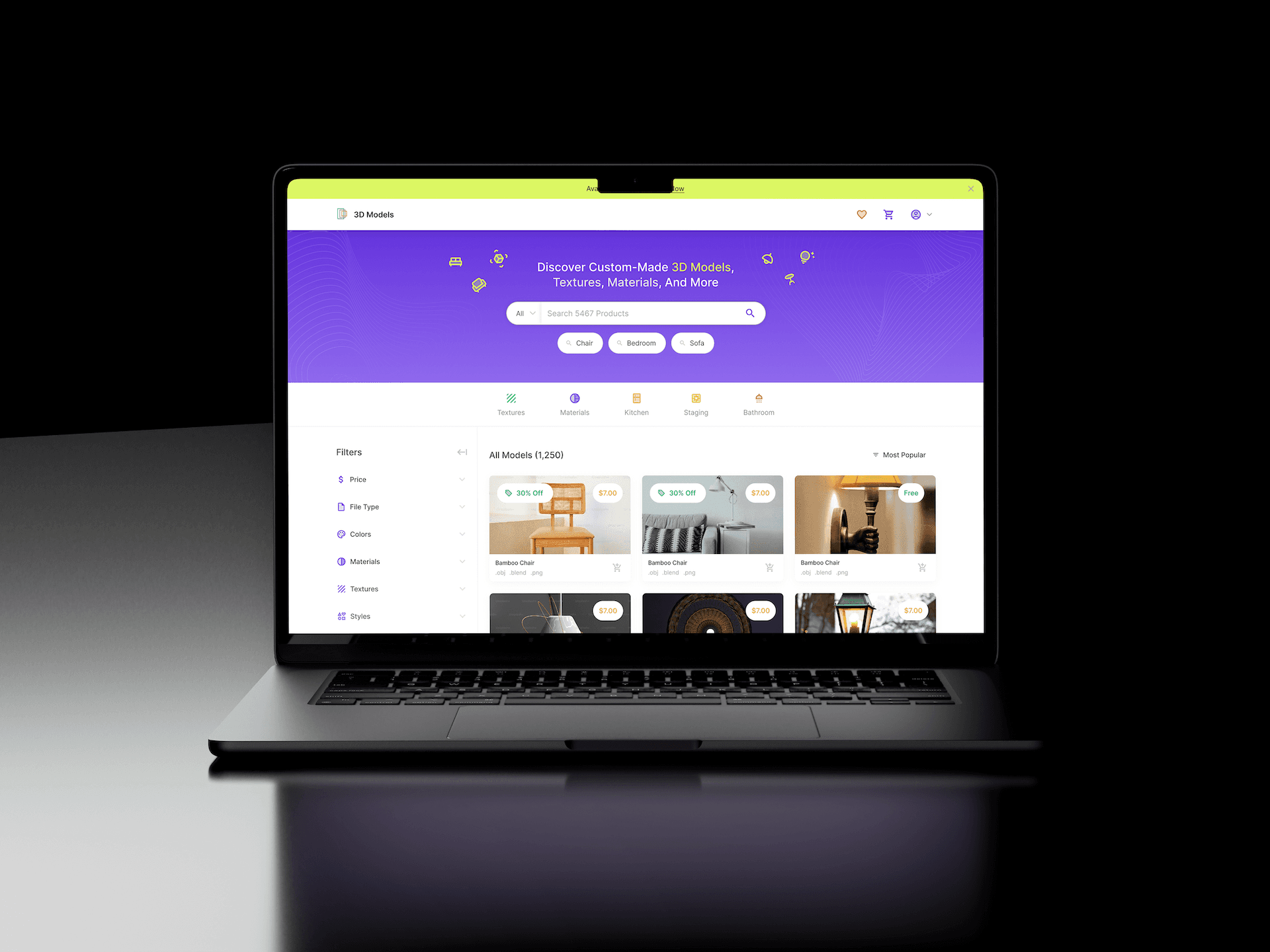
As an extension of Foyr’s interior design software, Foyr 3D Model is a new way for interior designers to find and use high-quality 3D assets directly within the Foyr ecosystem. The aim was to create an experience that feels intuitive — making it easy to search, explore, and drop models into ongoing design work without friction. This case study shares how the first version came together, from structure to final interface.
As an extension of Foyr’s interior design software, Foyr 3D Model is a new way for interior designers to find and use high-quality 3D assets directly within the Foyr ecosystem. The aim was to create an experience that feels intuitive — making it easy to search, explore, and drop models into ongoing design work without friction. This case study shares how the first version came together, from structure to final interface.
Business Insight — Missed Opportunity for Foyr
Business Insight — Missed Opportunity for Foyr
Currently, Foyr users spend money on third-party assets, instead of investing within the Foyr platform.
This is a lost revenue opportunity for Foyr and a missed chance to improve user retention.
Currently, Foyr users spend money on third-party assets, instead of investing within the Foyr platform.
This is a lost revenue opportunity for Foyr and a missed chance to improve user retention.
Who Does It Impact?
Who Does It Impact?
Interior Designers & Architects — Need assets for 3D visualization and client presentations.
Real Estate Stagers — Use virtual staging to sell properties faster.
Interior Designers & Architects — Need assets for 3D visualization and client presentations.
Real Estate Stagers — Use virtual staging to sell properties faster.
Objectives
Objectives
The main goal was to create a dedicated space for 3D assets that feels like a natural extension of the Foyr ecosystem. We wanted designers to be able to find the right furniture or decor models quickly, without hopping between multiple websites. The experience had to be fast, intuitive, and tightly connected to their existing design workflow.
We also aimed to:
Simplify the process of discovering and purchasing 3D assets
Offer powerful filters and search tools to help designers find what they need
Maintain visual and functional consistency with the rest of the Foyr platform
Build a scalable system that could grow into a larger marketplace over time
The main goal was to create a dedicated space for 3D assets that feels like a natural extension of the Foyr ecosystem. We wanted designers to be able to find the right furniture or decor models quickly, without hopping between multiple websites. The experience had to be fast, intuitive, and tightly connected to their existing design workflow.
We also aimed to:
Simplify the process of discovering and purchasing 3D assets
Offer powerful filters and search tools to help designers find what they need
Maintain visual and functional consistency with the rest of the Foyr platform
Build a scalable system that could grow into a larger marketplace over time
Success Metrics
Success Metrics
To measure how well the marketplace performs, we focused on a few key indicators that reflect both usability and business value:
To measure how well the marketplace performs, we focused on a few key indicators that reflect both usability and business value:
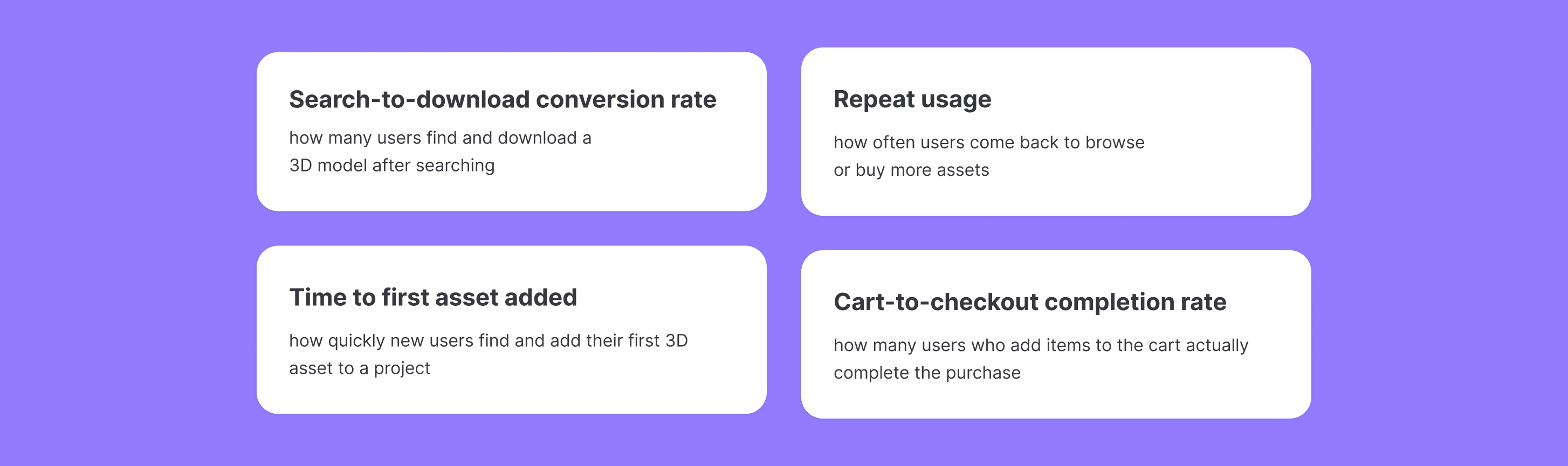
Although the project is still under development, these are some of the metrics we tried to optimise for. These will be tested during a period of 3–4 months to understand the next steps and the success of the first version.
Although the project is still under development, these are some of the metrics we tried to optimise for. These will be tested during a period of 3–4 months to understand the next steps and the success of the first version.
Understanding User Needs
Understanding User Needs
To design something truly useful, we first needed to understand how interior designers actually work with 3D assets. We focused on learning:
How they currently search for and collect assets
What slows them down when working across different tools or platforms
What kind of filters or product details matter most during their selection process
How they prefer to preview or compare assets before using them
Their frustrations with existing 3D asset marketplaces
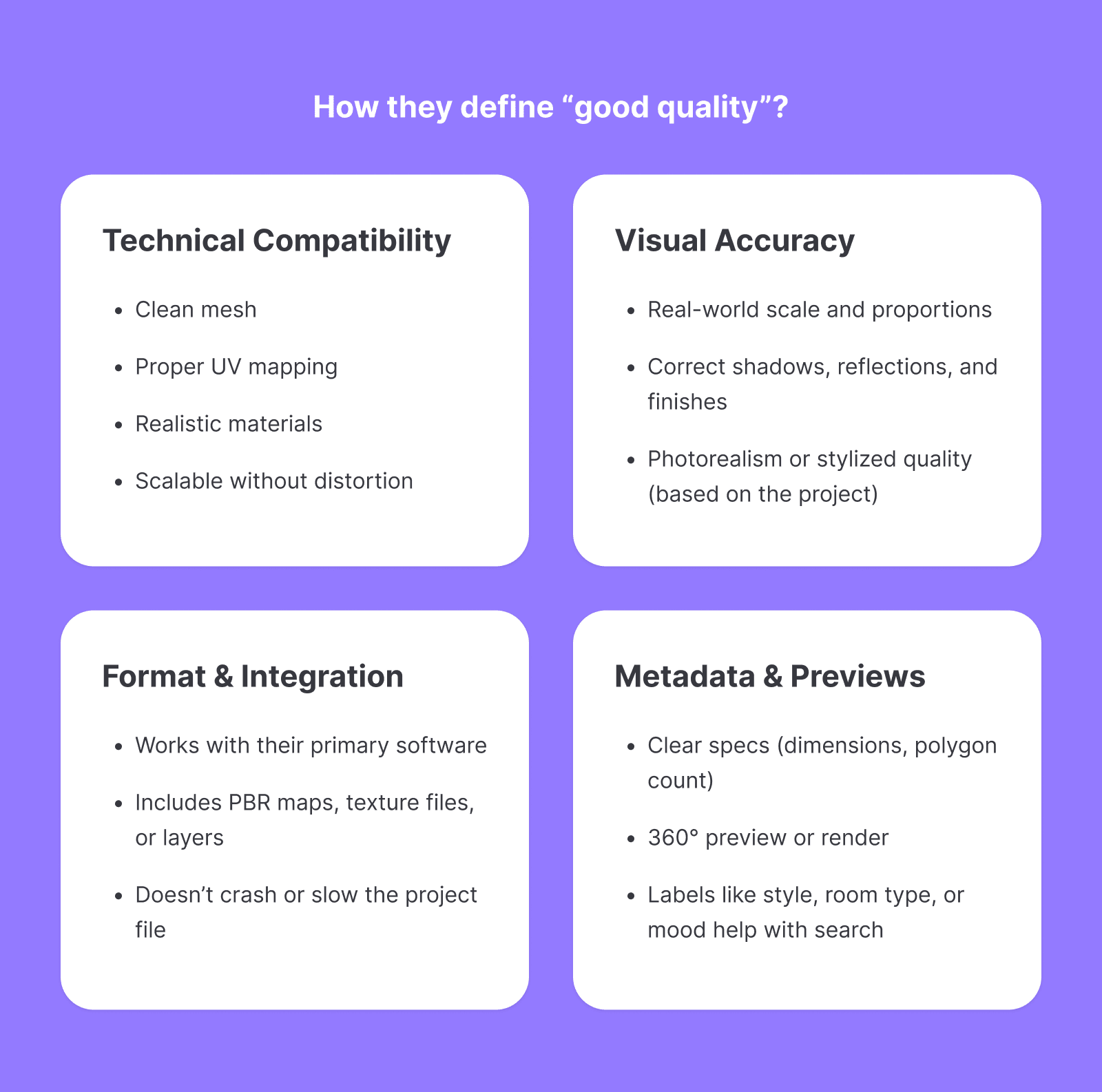
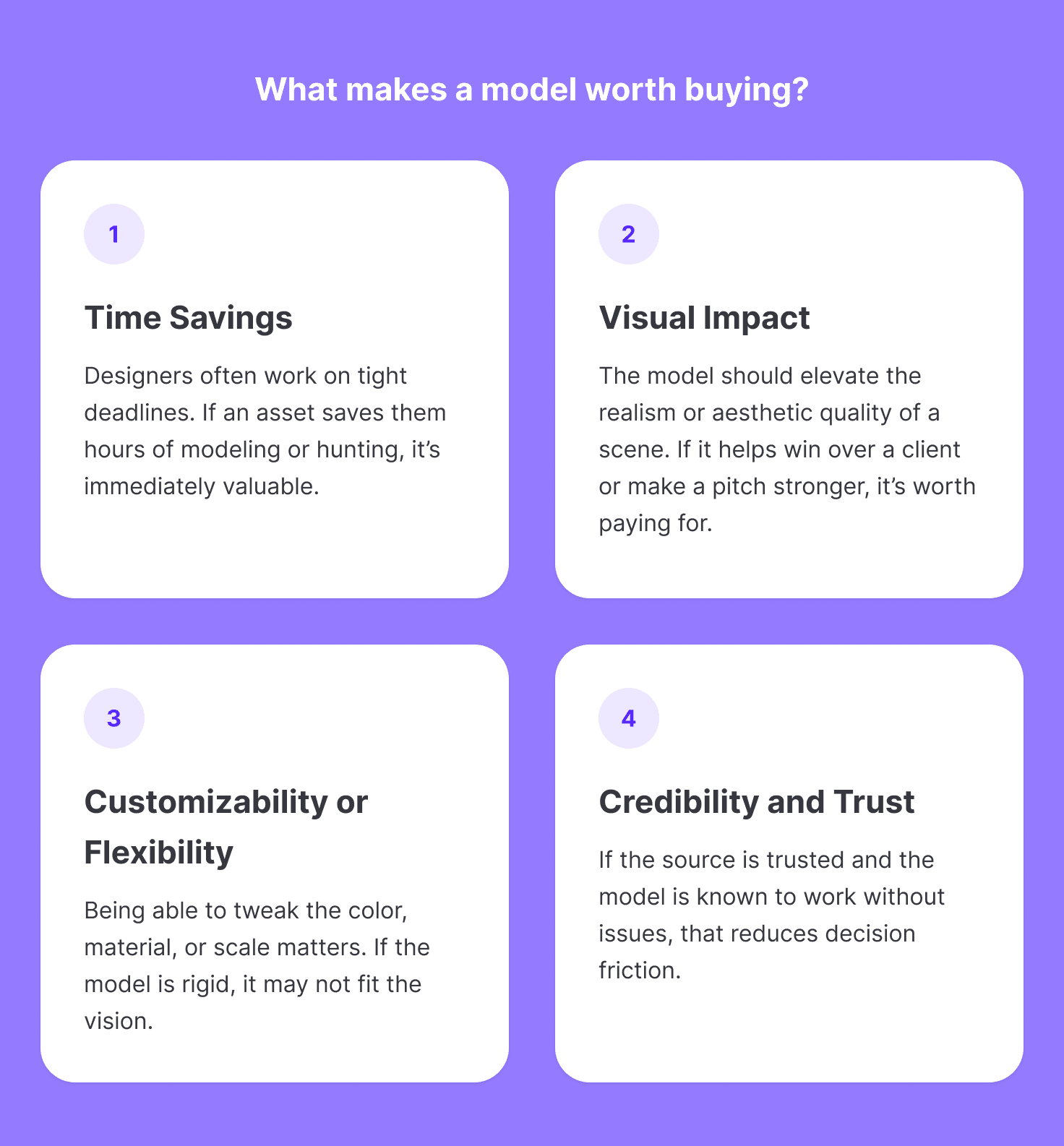
We also wanted to dig into their motivations — what makes a model worth buying, how they define “good quality,” and how important integration is to their daily workflow. These insights shaped everything from the layout of the product screen to the way we structured metadata and previews.
To design something truly useful, we first needed to understand how interior designers actually work with 3D assets. We focused on learning:
How they currently search for and collect assets
What slows them down when working across different tools or platforms
What kind of filters or product details matter most during their selection process
How they prefer to preview or compare assets before using them
Their frustrations with existing 3D asset marketplaces
We also wanted to dig into their motivations — what makes a model worth buying, how they define “good quality,” and how important integration is to their daily workflow. These insights shaped everything from the layout of the product screen to the way we structured metadata and previews.
Competitor Research
Competitor Research
Most 3D asset marketplaces cater to a broad range of industries, from gaming to architecture, but very few are designed specifically for interior designers.
Most 3D asset marketplaces cater to a broad range of industries, from gaming to architecture, but very few are designed specifically for interior designers.
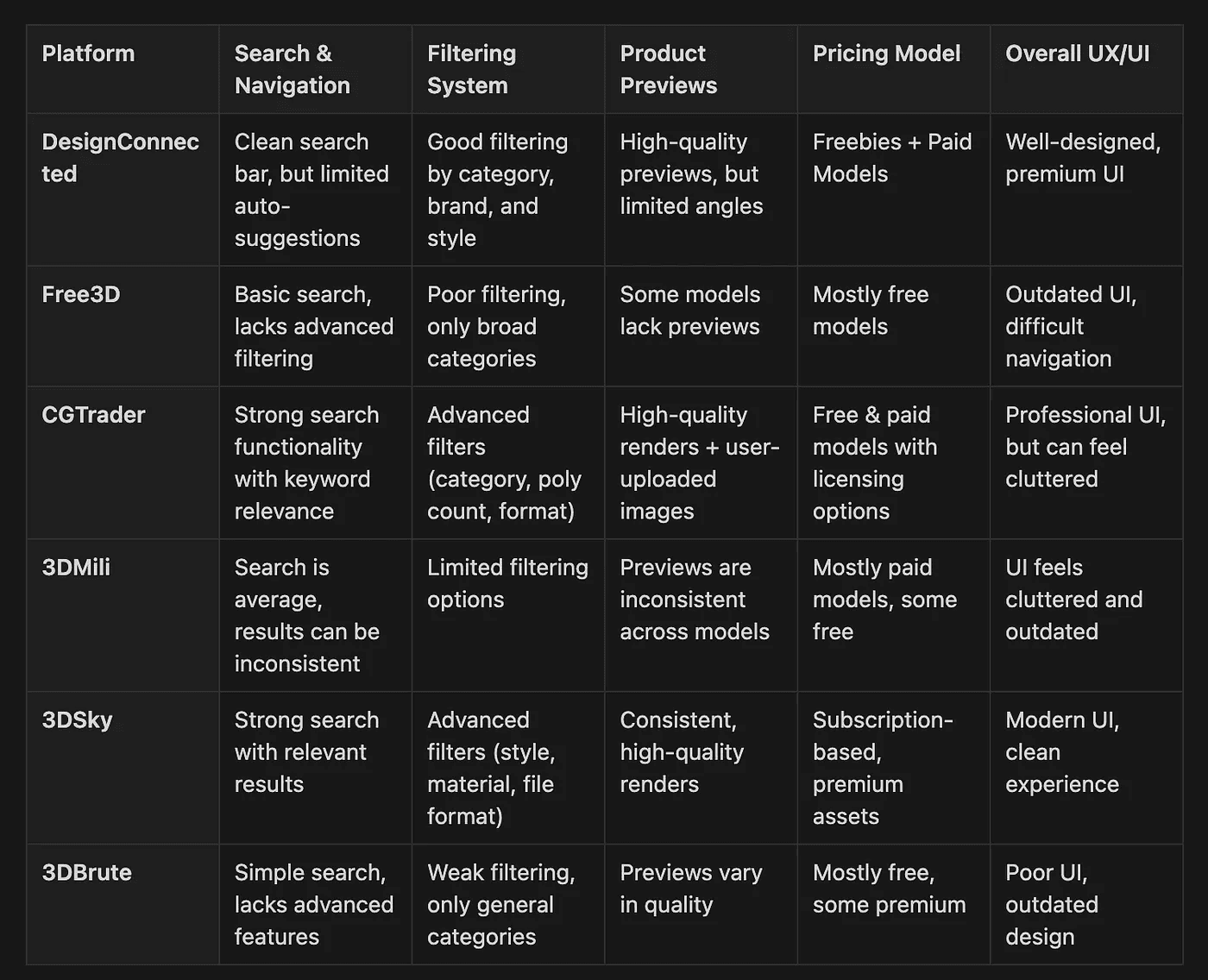
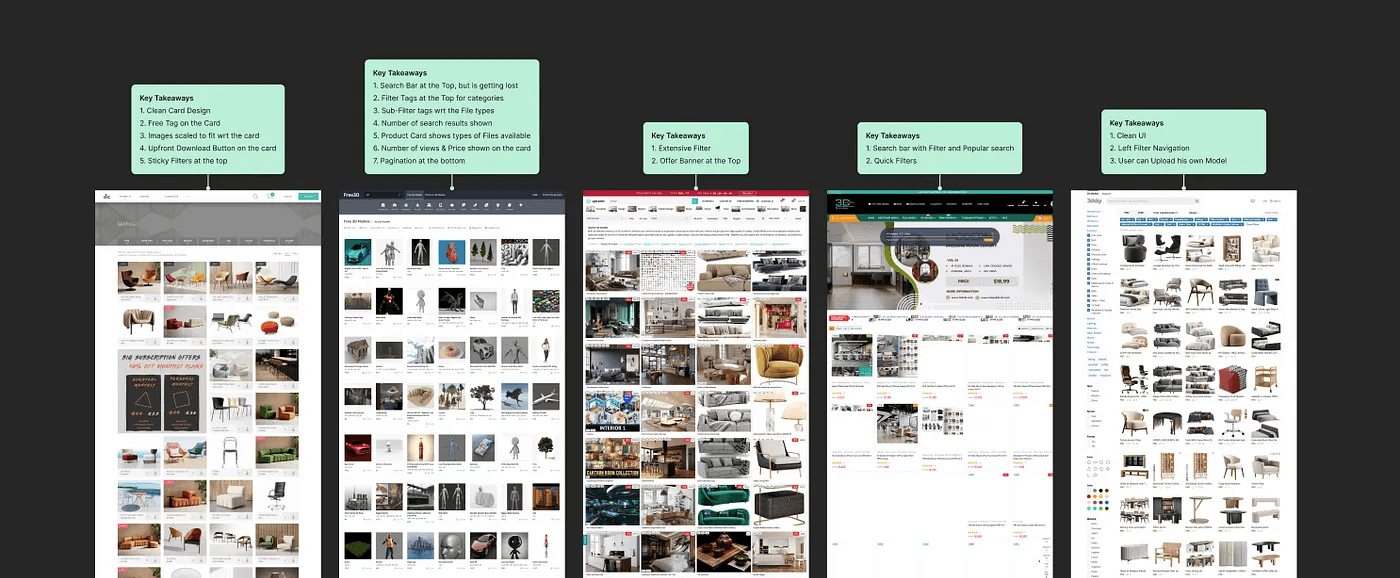
Most competitors have a decent selection of assets, but their search, filters, and checkout flows are outdated or inefficient. By focusing on speed, ease of use, and AI-driven personalization, Foyr 3D can create a seamless, designer-friendly experience that saves users time and frustration.
There were 2 other important things to understand as they would help shape some important design decisons — How they define good quality and What makes a model worth buying.
Most competitors have a decent selection of assets, but their search, filters, and checkout flows are outdated or inefficient. By focusing on speed, ease of use, and AI-driven personalization, Foyr 3D can create a seamless, designer-friendly experience that saves users time and frustration.
There were 2 other important things to understand as they would help shape some important design decisons — How they define good quality and What makes a model worth buying.
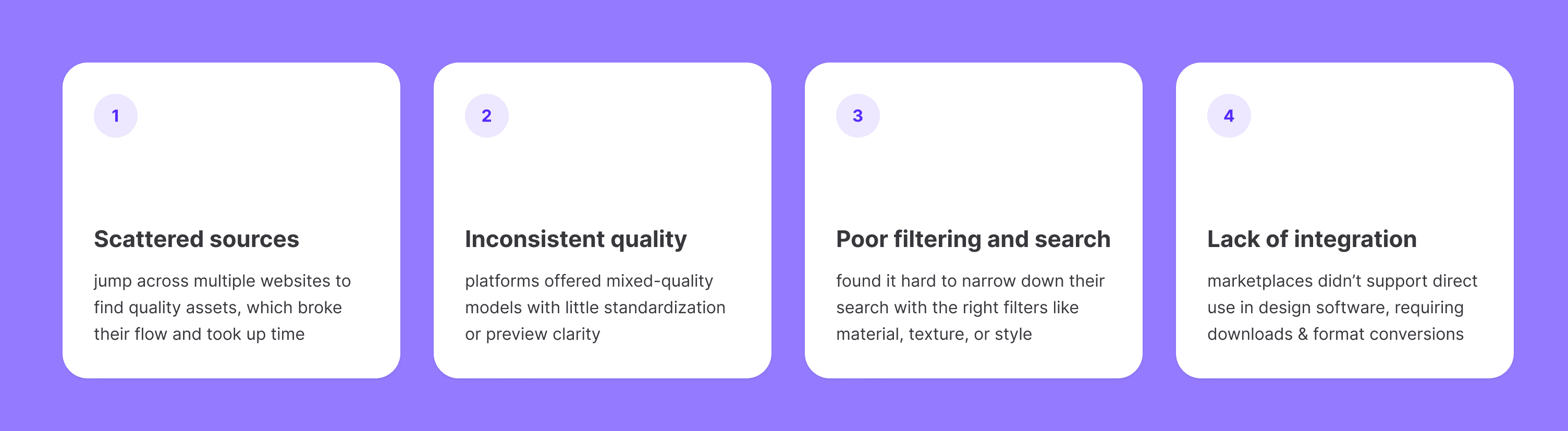
Through competitive analysis, user research, and usability heuristics, we identified the core problems:
Through competitive analysis, user research, and usability heuristics, we identified the core problems:
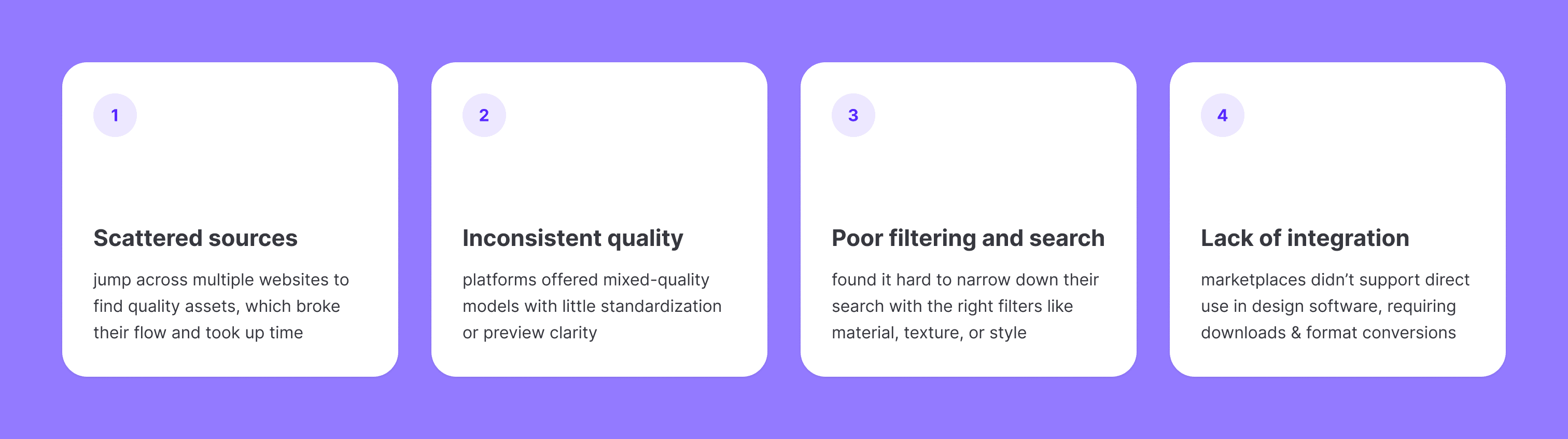
Each design decision was made to remove friction and improve discoverability, efficiency, and usability.
Each design decision was made to remove friction and improve discoverability, efficiency, and usability.
Summarising the Problem
Summarising the Problem
Through research, we discovered that sourcing 3D assets is one of the most time-consuming and frustrating parts of their workflow. Designers typically rely on multiple third-party marketplaces, each with its own interface, inconsistent quality standards, and varying file formats.
This creates friction, especially when designers are working under tight deadlines or handling multiple client revisions. Common issues include:
Difficulty filtering models by key attributes like material, texture, or room type
Lack of visual previews or clear compatibility with design software
Downloaded files that don’t open or integrate smoothly into existing design tools
Through research, we discovered that sourcing 3D assets is one of the most time-consuming and frustrating parts of their workflow. Designers typically rely on multiple third-party marketplaces, each with its own interface, inconsistent quality standards, and varying file formats.
This creates friction, especially when designers are working under tight deadlines or handling multiple client revisions. Common issues include:
Difficulty filtering models by key attributes like material, texture, or room type
Lack of visual previews or clear compatibility with design software
Downloaded files that don’t open or integrate smoothly into existing design tools
Problem Statement
Problem Statement
Interior designers waste time searching across scattered marketplaces for 3D assets that often lack quality, compatibility, or proper filters — slowing down their workflow and impacting productivity.
Interior designers waste time searching across scattered marketplaces for 3D assets that often lack quality, compatibility, or proper filters — slowing down their workflow and impacting productivity.
Brainstoming Possible Solutions
Brainstoming Possible Solutions
During ideation, we explored multiple distinct directions that could potentially solve the asset discovery and usage problem for interior designers. Each concept addressed user pain points in a unique way — some solving for the delight while some making the discovery easy.
During ideation, we explored multiple distinct directions that could potentially solve the asset discovery and usage problem for interior designers. Each concept addressed user pain points in a unique way — some solving for the delight while some making the discovery easy.
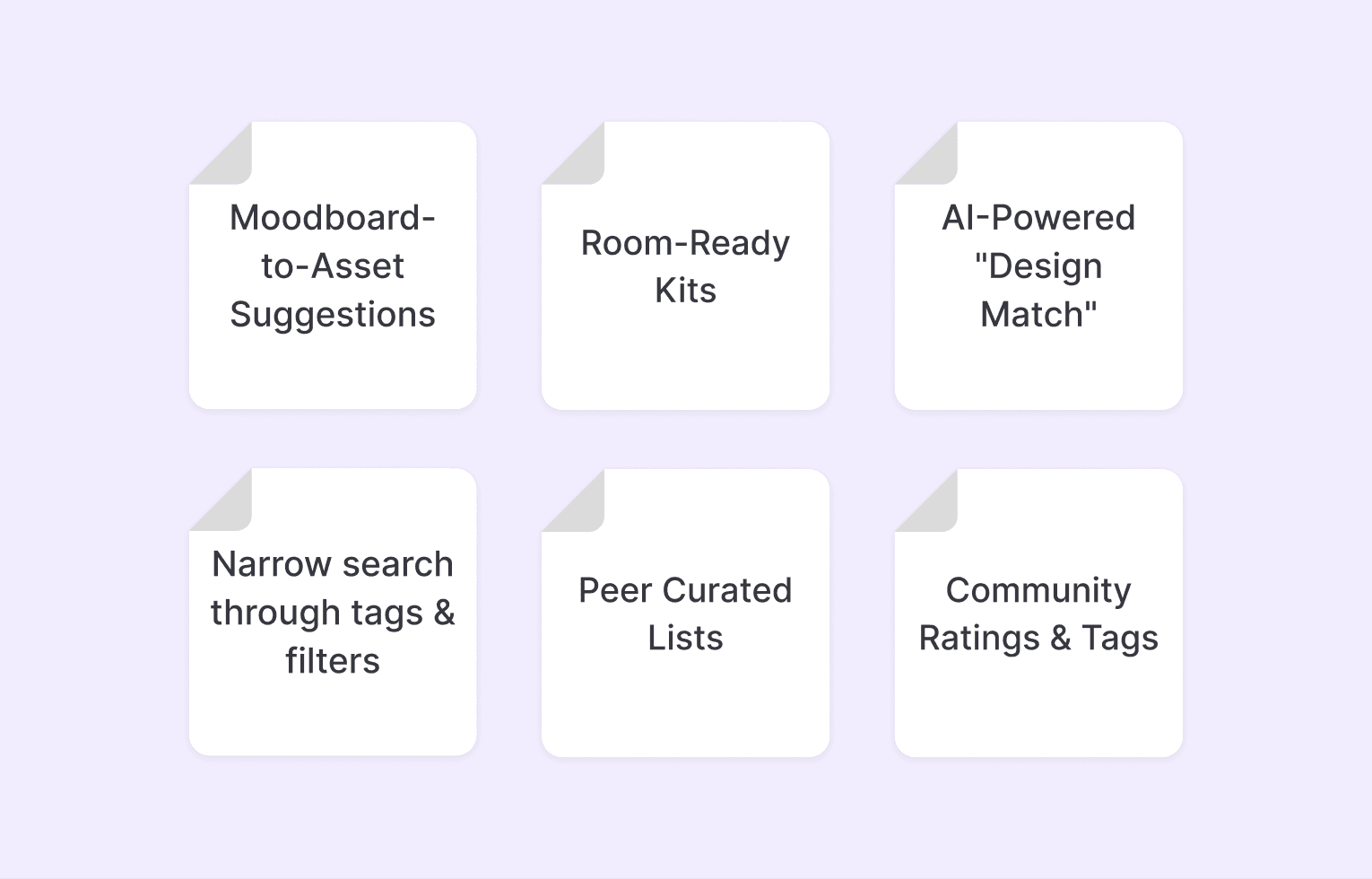
After brainstorming these ideas, we put them in Impact vs Effort Matrix to understand which features to prioritise in the first version.
After brainstorming these ideas, we put them in Impact vs Effort Matrix to understand which features to prioritise in the first version.
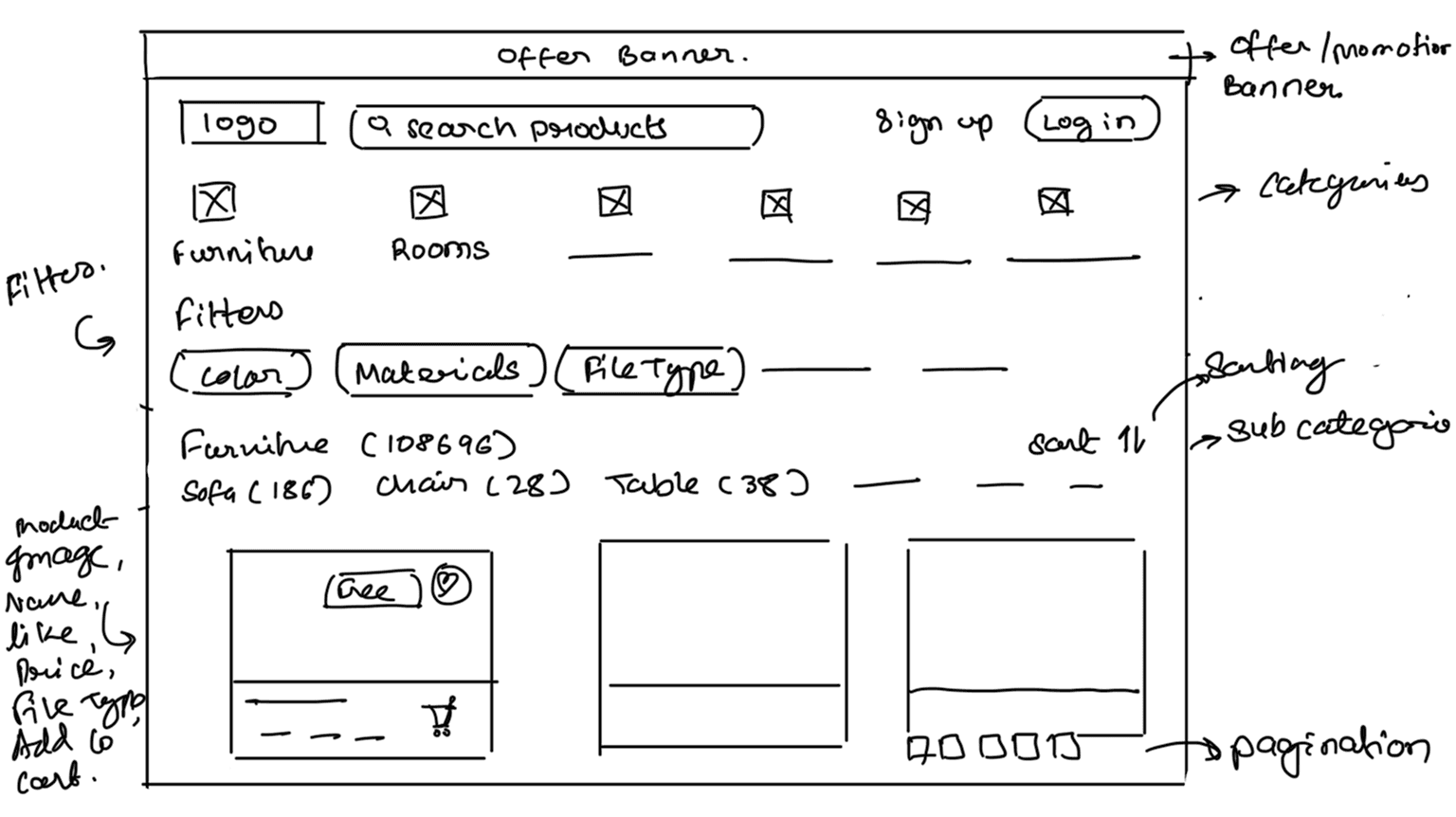
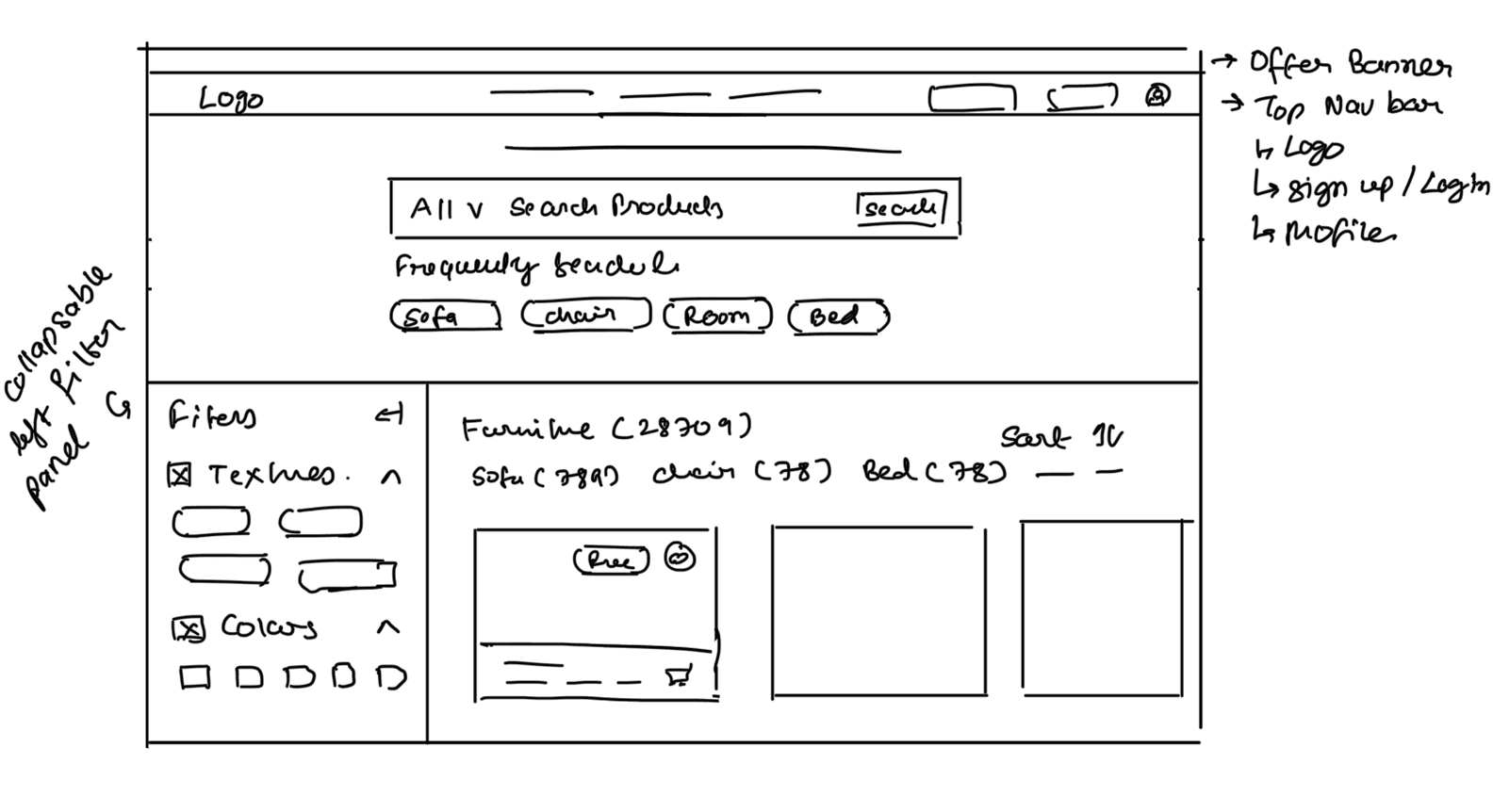
Final Solution — Introducing Foyr 3D
Final Solution — Introducing Foyr 3D
Foyr 3D Model is a specialized marketplace where interior designers can browse, purchase, and integrate premium-quality 3D furniture and decor assets directly into their Foyr Neo design projects. This extension eliminates the need for third-party asset libraries, ensuring a smooth, one-platform workflow for interior professionals.
Foyr 3D Model is a specialized marketplace where interior designers can browse, purchase, and integrate premium-quality 3D furniture and decor assets directly into their Foyr Neo design projects. This extension eliminates the need for third-party asset libraries, ensuring a smooth, one-platform workflow for interior professionals.
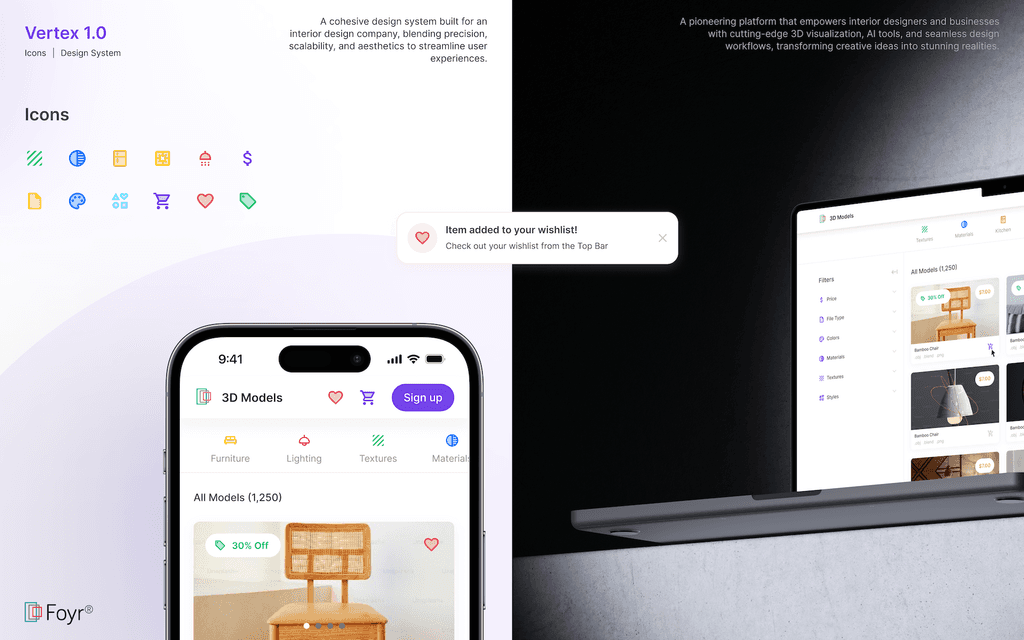
Visual Direction
Visual Direction
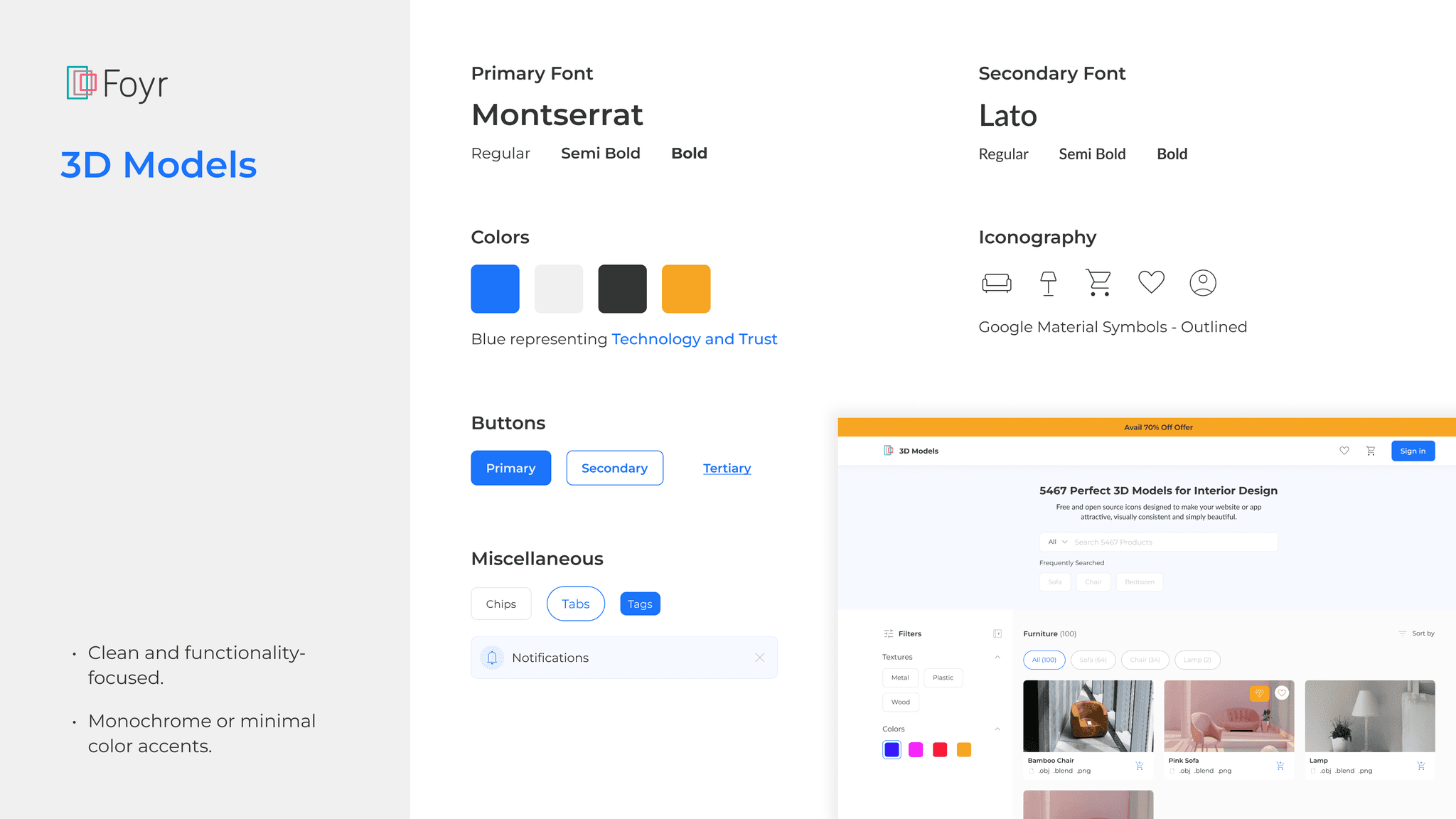
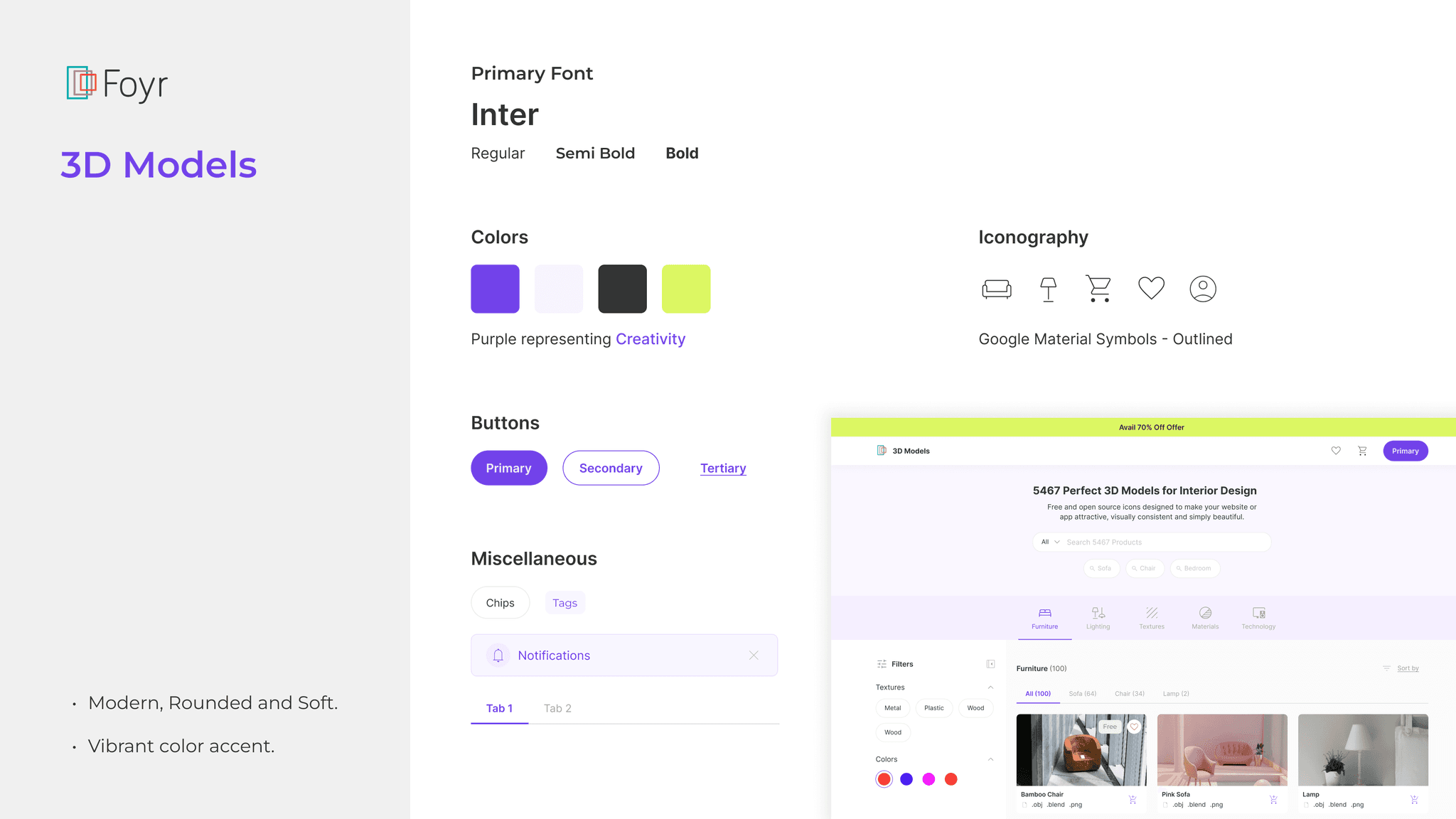
Two visual directions were proposed keeping the brand in mind. We decided to go ahead with the Second direction since it matched the aesthetic of the brand while being vibrant. The Font was chosen in a way that it doesn’t vary a lot from the whole Foyr Suite and the colours are complimentary to current colours.
Two visual directions were proposed keeping the brand in mind. We decided to go ahead with the Second direction since it matched the aesthetic of the brand while being vibrant. The Font was chosen in a way that it doesn’t vary a lot from the whole Foyr Suite and the colours are complimentary to current colours.
Design System — Vertex 1.0
Design System — Vertex 1.0
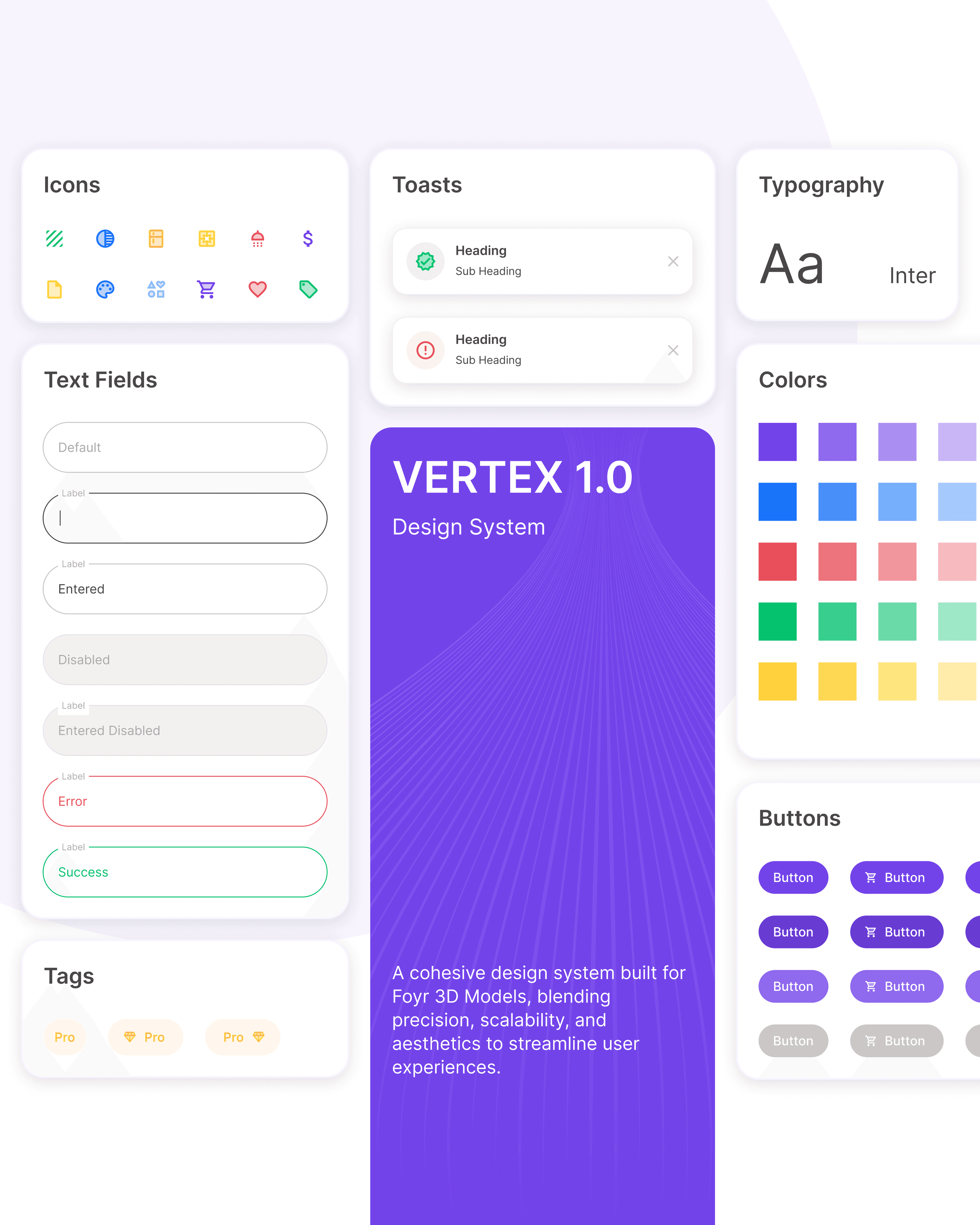
To ensure scalability, consistency, and efficiency, a design system was developed for Foyr 3D. This system establishes a structured visual and interaction framework that makes the platform intuitive, visually cohesive, and easy to expand as new features will be introduced in the next versions.
Scalability — A well-defined system makes it easier to add new components, features, and pages without breaking design consistency.
Consistency — Ensures that elements like buttons, typography, icons, and colors remain uniform across the platform, improving usability.
Efficiency — Reusable UI components reduce design and development time, making the workflow more agile.
To ensure scalability, consistency, and efficiency, a design system was developed for Foyr 3D. This system establishes a structured visual and interaction framework that makes the platform intuitive, visually cohesive, and easy to expand as new features will be introduced in the next versions.
Scalability — A well-defined system makes it easier to add new components, features, and pages without breaking design consistency.
Consistency — Ensures that elements like buttons, typography, icons, and colors remain uniform across the platform, improving usability.
Efficiency — Reusable UI components reduce design and development time, making the workflow more agile.
Landing Page for Foyr 3D — Designed for Discoverability & Seamless Integration
Landing Page for Foyr 3D — Designed for Discoverability & Seamless Integration
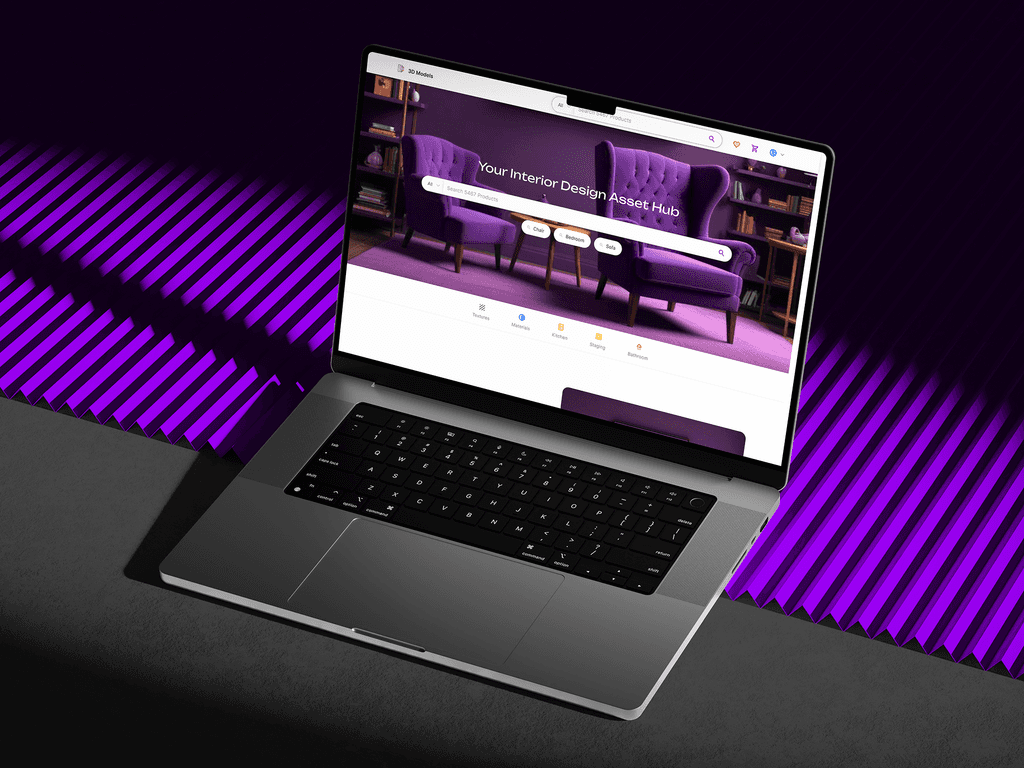
To increase visibility, attract new users, and integrate Foyr 3D into the workflow of interior designers, a dedicated landing page was designed. This page serves as an entry point to introduce the marketplace, showcase its value, and drive conversions.
To increase visibility, attract new users, and integrate Foyr 3D into the workflow of interior designers, a dedicated landing page was designed. This page serves as an entry point to introduce the marketplace, showcase its value, and drive conversions.
Now let’s look at each User Flow in a bit of detail —
Now let’s look at each User Flow in a bit of detail —
1. Search Bar & Predictive Search
1. Search Bar & Predictive Search
Many marketplaces rely on filters, but designers often think in specific terms — rather than browsing through endless categories.
Questions that shaped the interface:
How can we make search results instant and relevant?
Should we show visual search previews or just text suggestions?
What metadata should the search prioritize — style, material, or compatibility?
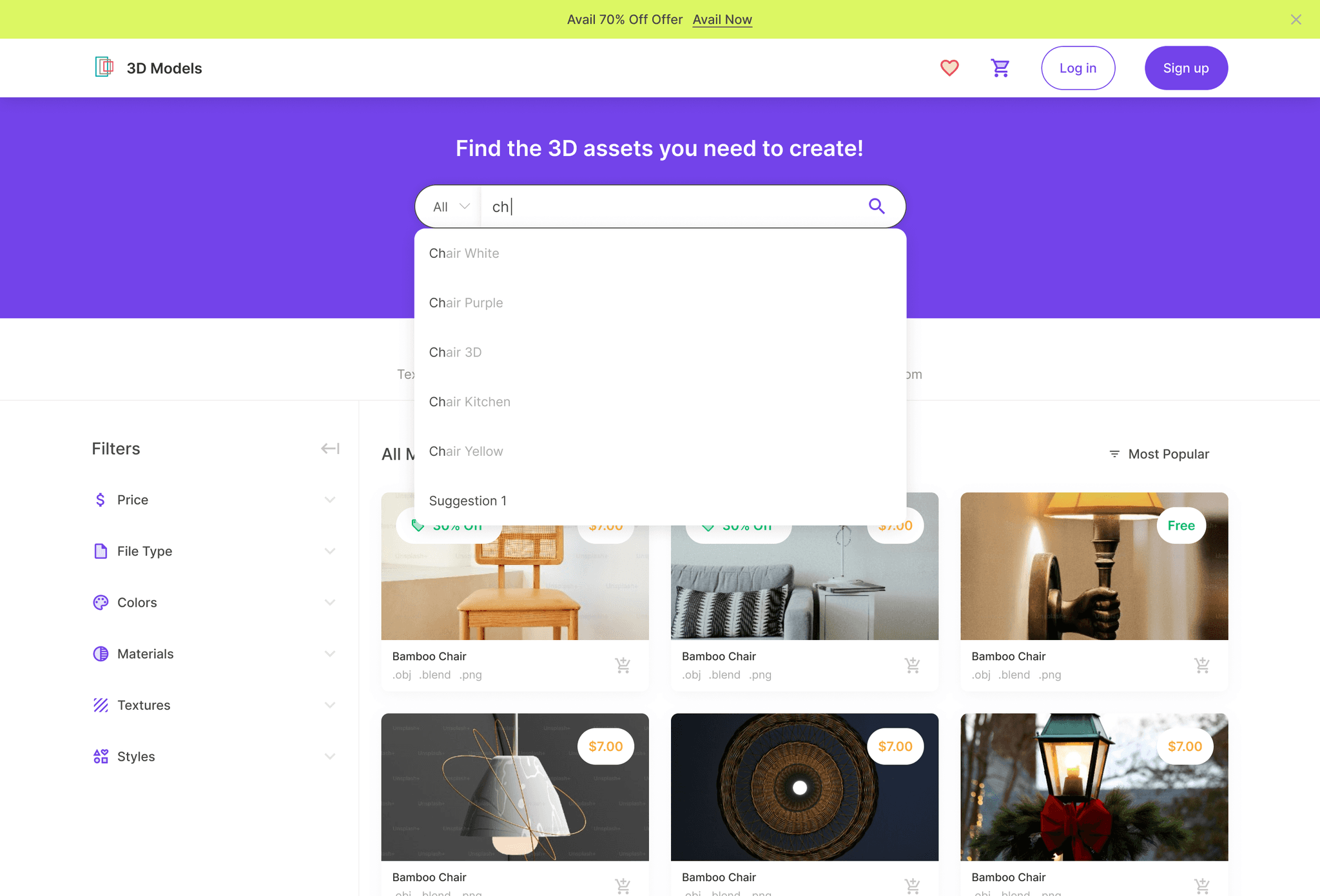
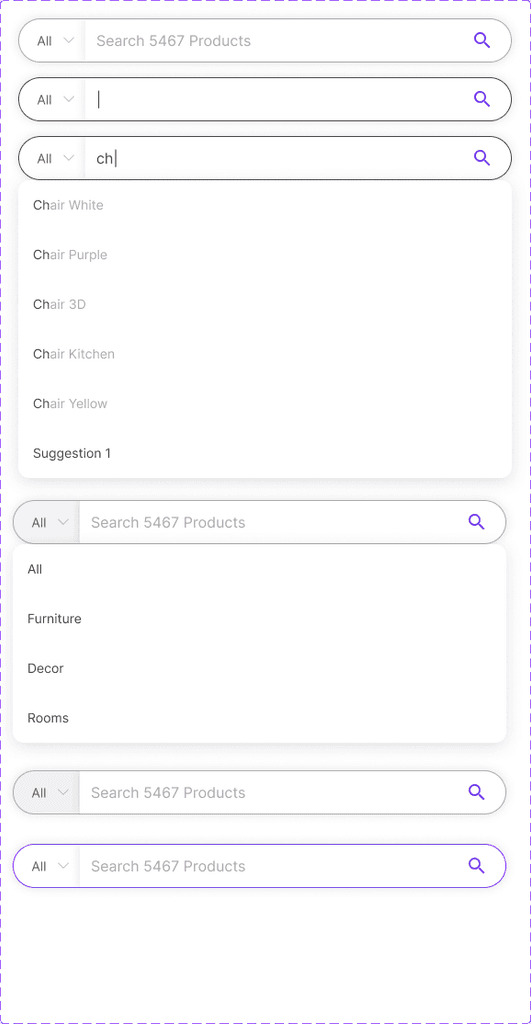
After evaluating platforms like Freepik, Behance, and Airbnb, we decided to go ahead with predictive search dropdown with:
Auto-suggestions based on popular searches.
Keyword-based and tag-based indexing for better accuracy.
Many marketplaces rely on filters, but designers often think in specific terms — rather than browsing through endless categories.
Questions that shaped the interface:
How can we make search results instant and relevant?
Should we show visual search previews or just text suggestions?
What metadata should the search prioritize — style, material, or compatibility?
After evaluating platforms like Freepik, Behance, and Airbnb, we decided to go ahead with predictive search dropdown with:
Auto-suggestions based on popular searches.
Keyword-based and tag-based indexing for better accuracy.
One important thing to note here -
One important thing to note here -
Visual Previews were a better choice in search, but as this was the first version and we had to ship fast, we took a decision to add them in the later versions — keeping the design time and dev time in check.
Visual Previews were a better choice in search, but as this was the first version and we had to ship fast, we took a decision to add them in the later versions — keeping the design time and dev time in check.
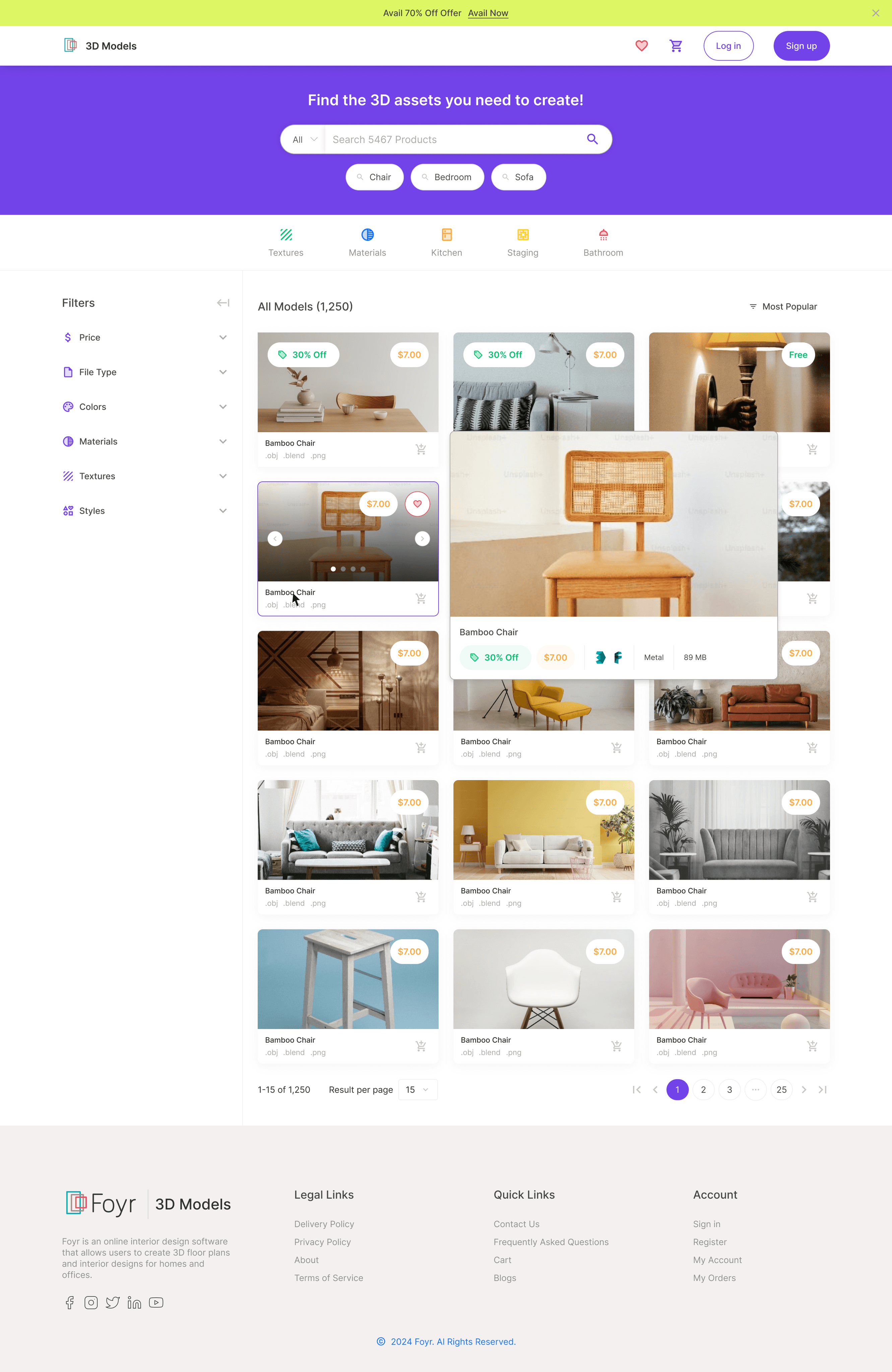
2. Filter Panel — Balancing Depth & Simplicity
2. Filter Panel — Balancing Depth & Simplicity
Designers often apply multiple filters but don’t want an overly complex system. The challenge was:
How do we provide deep filtering options without overwhelming users?
Should filters be in a sidebar, dropdown, or floating panel?
How do we prioritize filters based on user needs?
Designers often apply multiple filters but don’t want an overly complex system. The challenge was:
How do we provide deep filtering options without overwhelming users?
Should filters be in a sidebar, dropdown, or floating panel?
How do we prioritize filters based on user needs?
Thought process:
Thought process:
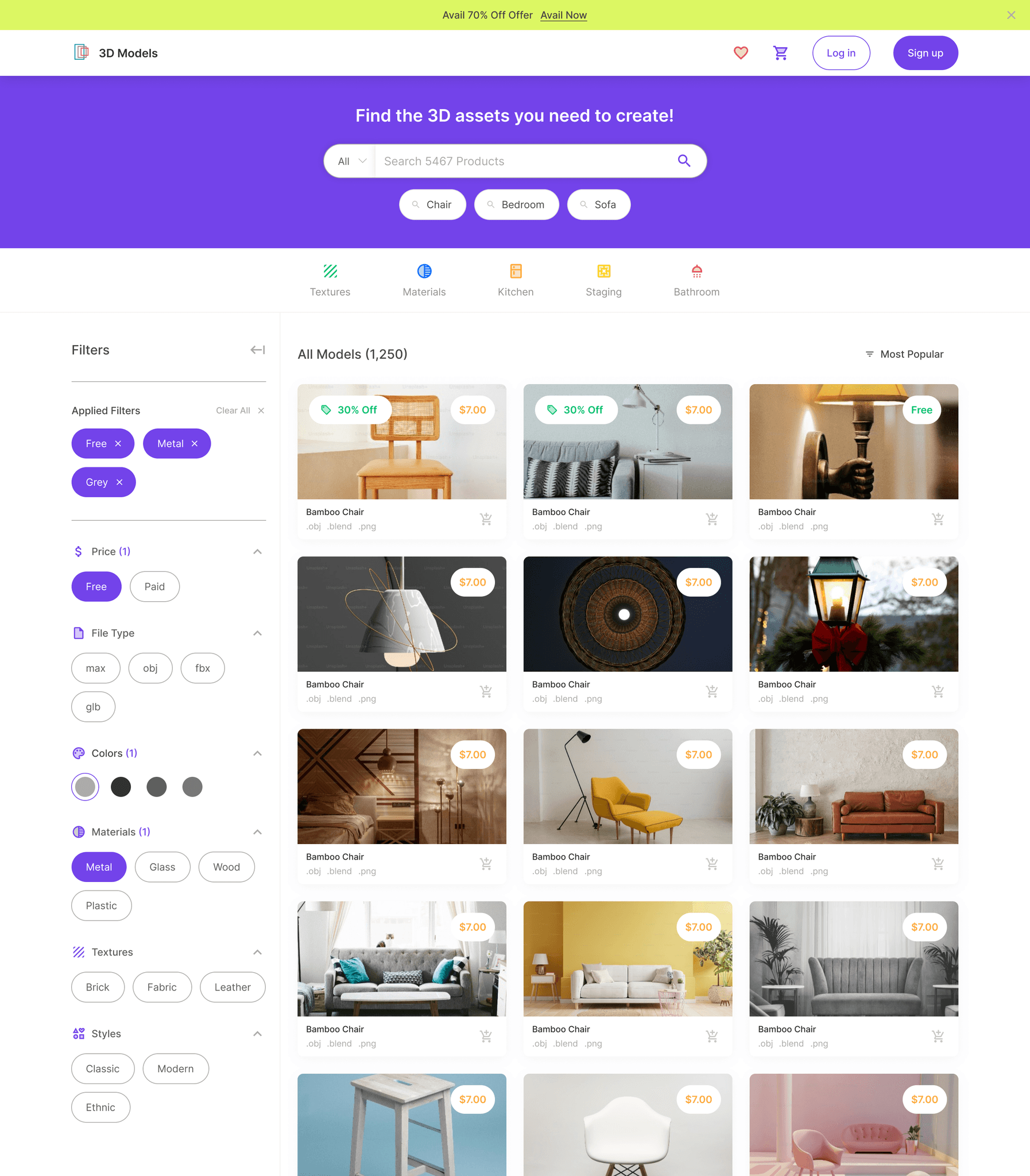
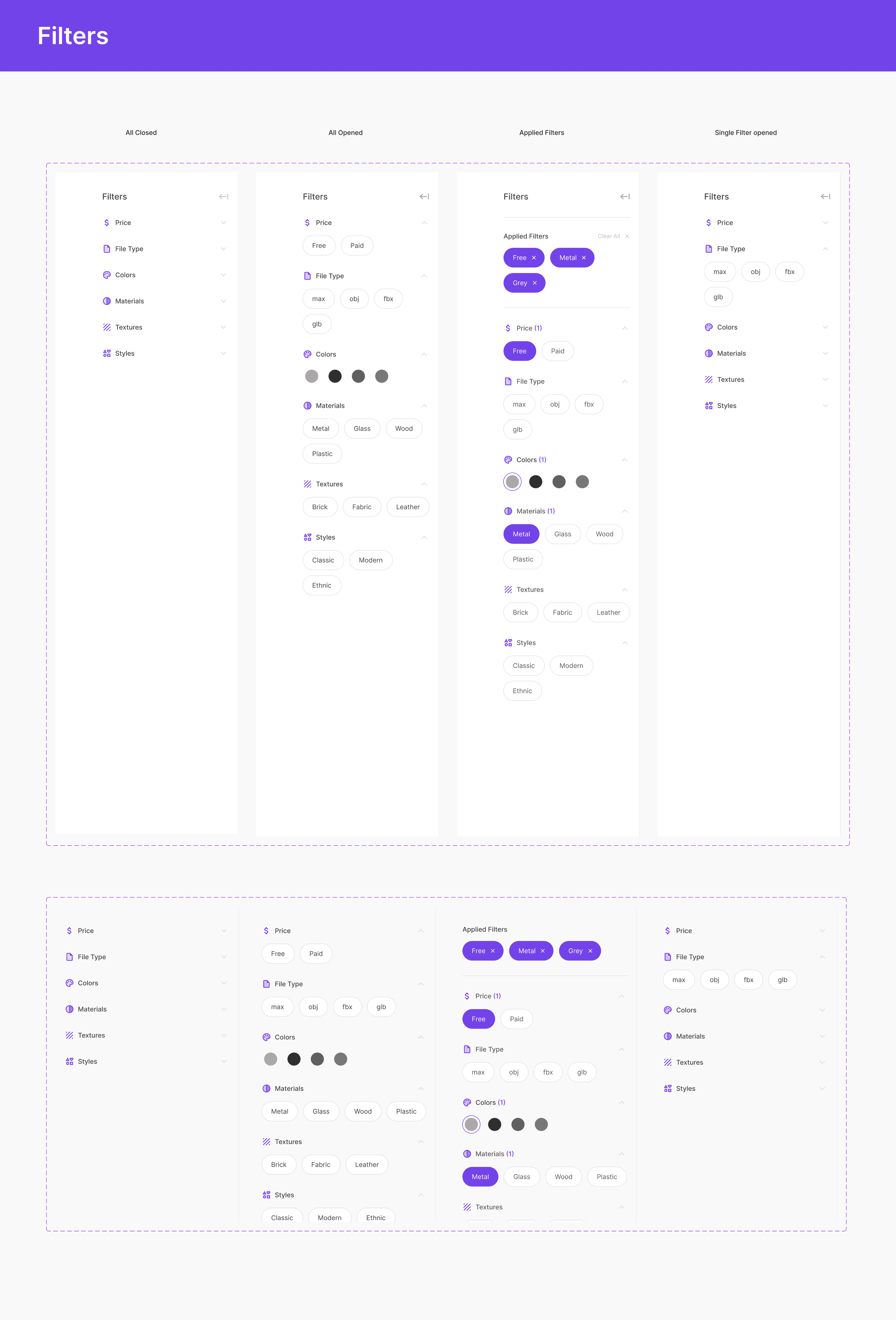
Inspired by e-commerce UI patterns (Amazon, Figma asset libraries, Freepik), we structured filters into double nested tab structures.
Used quick filter tabs for categories like Texture, Material, Kitchen, Staging, and Bathroom — so designers could filter with a single tap.
Created sticky filters for persistent access while scrolling.
Inspired by e-commerce UI patterns (Amazon, Figma asset libraries, Freepik), we structured filters into double nested tab structures.
Used quick filter tabs for categories like Texture, Material, Kitchen, Staging, and Bathroom — so designers could filter with a single tap.
Created sticky filters for persistent access while scrolling.
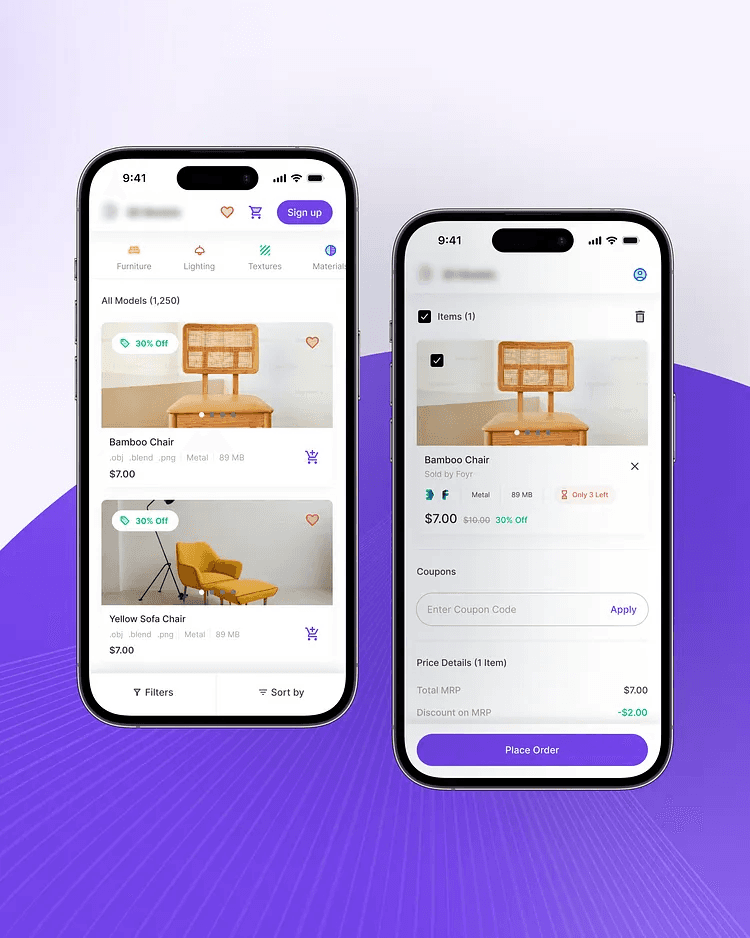
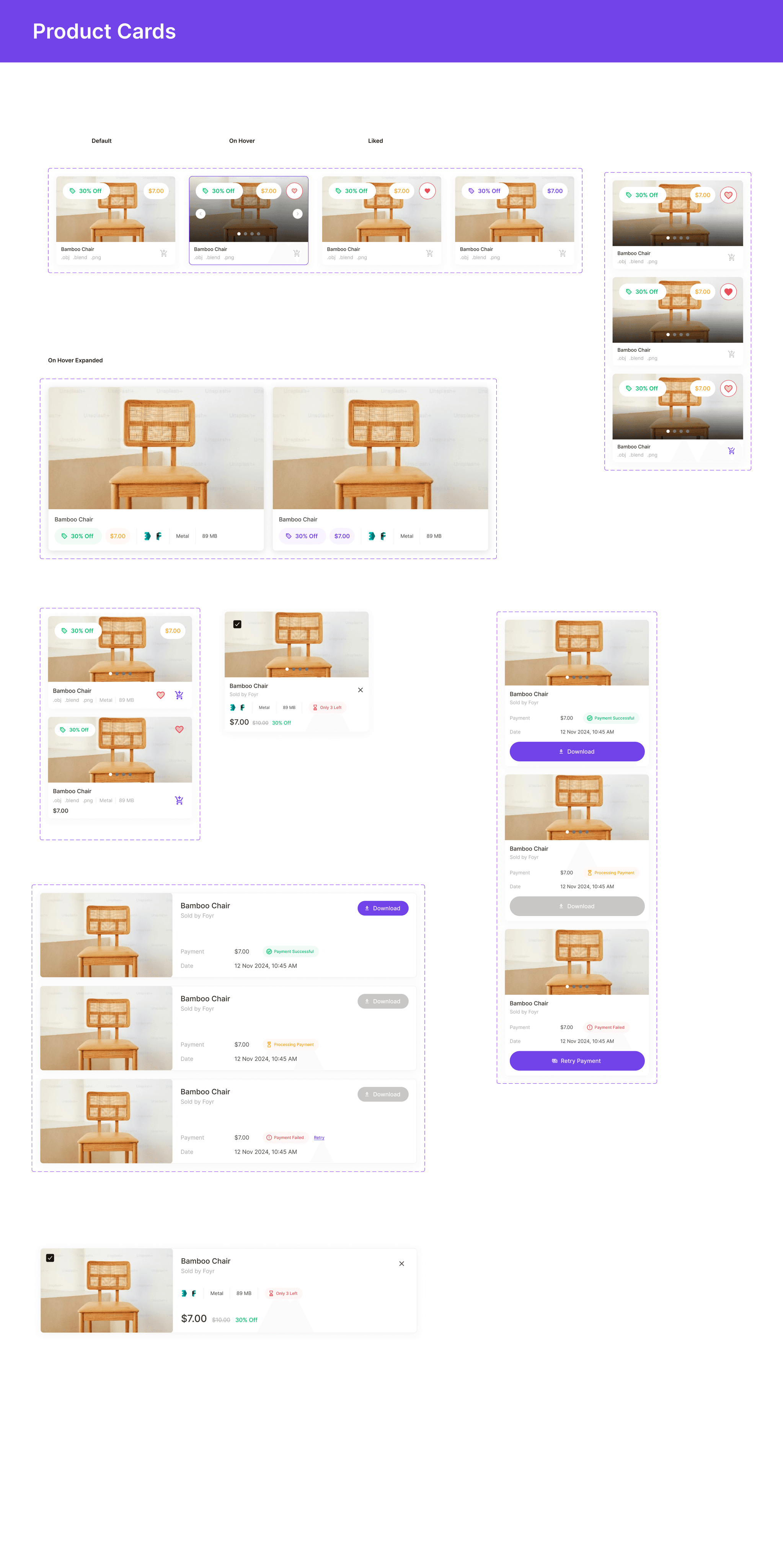
3. Grid-Based Product Listings with Interactive Previews
3. Grid-Based Product Listings with Interactive Previews
Designers are highly visual — text-heavy listings wouldn’t work. Instead, the focus had to be on:
Clear product thumbnails with realistic previews.
Quick add-to-cart functionality for efficiency.
Hover effects for additional details (material, dimensions, style, compatibility).
Designers are highly visual — text-heavy listings wouldn’t work. Instead, the focus had to be on:
Clear product thumbnails with realistic previews.
Quick add-to-cart functionality for efficiency.
Hover effects for additional details (material, dimensions, style, compatibility).
4. Product Detail Screen
4. Product Detail Screen
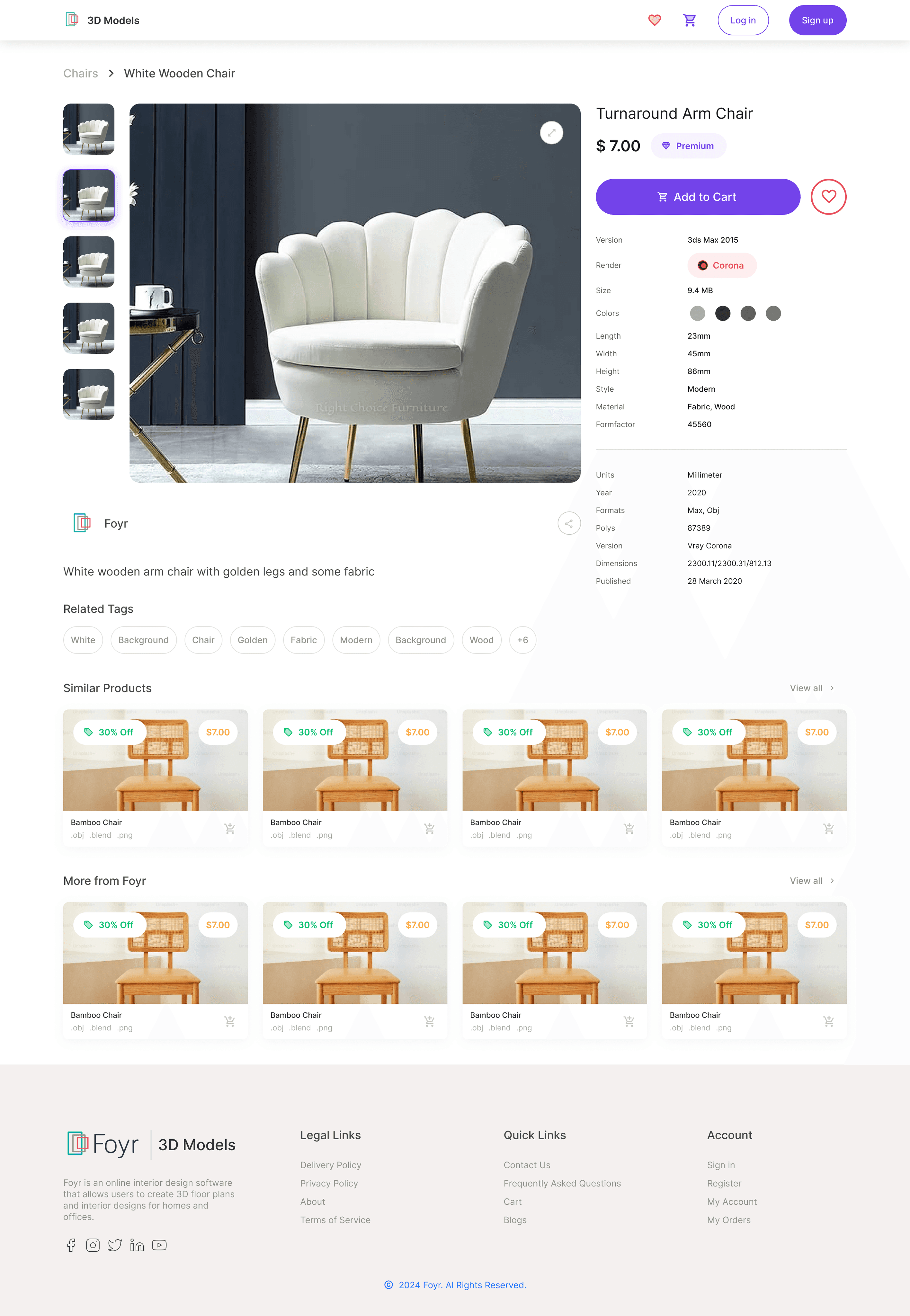
Hero Section: Large Product Preview
Decision: A prominent, high-resolution image of the 3D model with a thumbnail carousel on the left for multiple views.
Motivation: Interior designers need to assess textures, materials, and lighting reflections before purchasing. A clear, detailed product image builds trust and eliminates uncertainty.
Questions Considered:
How can we ensure designers get a realistic idea of the model’s quality?
Do users need multiple angles or renders?
Should thumbnails be horizontal or vertical for better usability?
Hero Section: Large Product Preview
Decision: A prominent, high-resolution image of the 3D model with a thumbnail carousel on the left for multiple views.
Motivation: Interior designers need to assess textures, materials, and lighting reflections before purchasing. A clear, detailed product image builds trust and eliminates uncertainty.
Questions Considered:
How can we ensure designers get a realistic idea of the model’s quality?
Do users need multiple angles or renders?
Should thumbnails be horizontal or vertical for better usability?
Product Specifications Panel: Informative Yet Minimal
Product Specifications Panel: Informative Yet Minimal
Decision: A right-hand panel displays essential specs like file format, material, texture, dimensions, polygon count, and render engine compatibility.
Motivation: Interior designers need technical details to ensure the model fits their project needs. This panel keeps it digestible while avoiding information overload.
Questions Considered:
What are the most crucial details designers check before purchasing?
Should this be inline or in a collapsible tab?
How do we balance technical depth with readability?
Decision: A right-hand panel displays essential specs like file format, material, texture, dimensions, polygon count, and render engine compatibility.
Motivation: Interior designers need technical details to ensure the model fits their project needs. This panel keeps it digestible while avoiding information overload.
Questions Considered:
What are the most crucial details designers check before purchasing?
Should this be inline or in a collapsible tab?
How do we balance technical depth with readability?
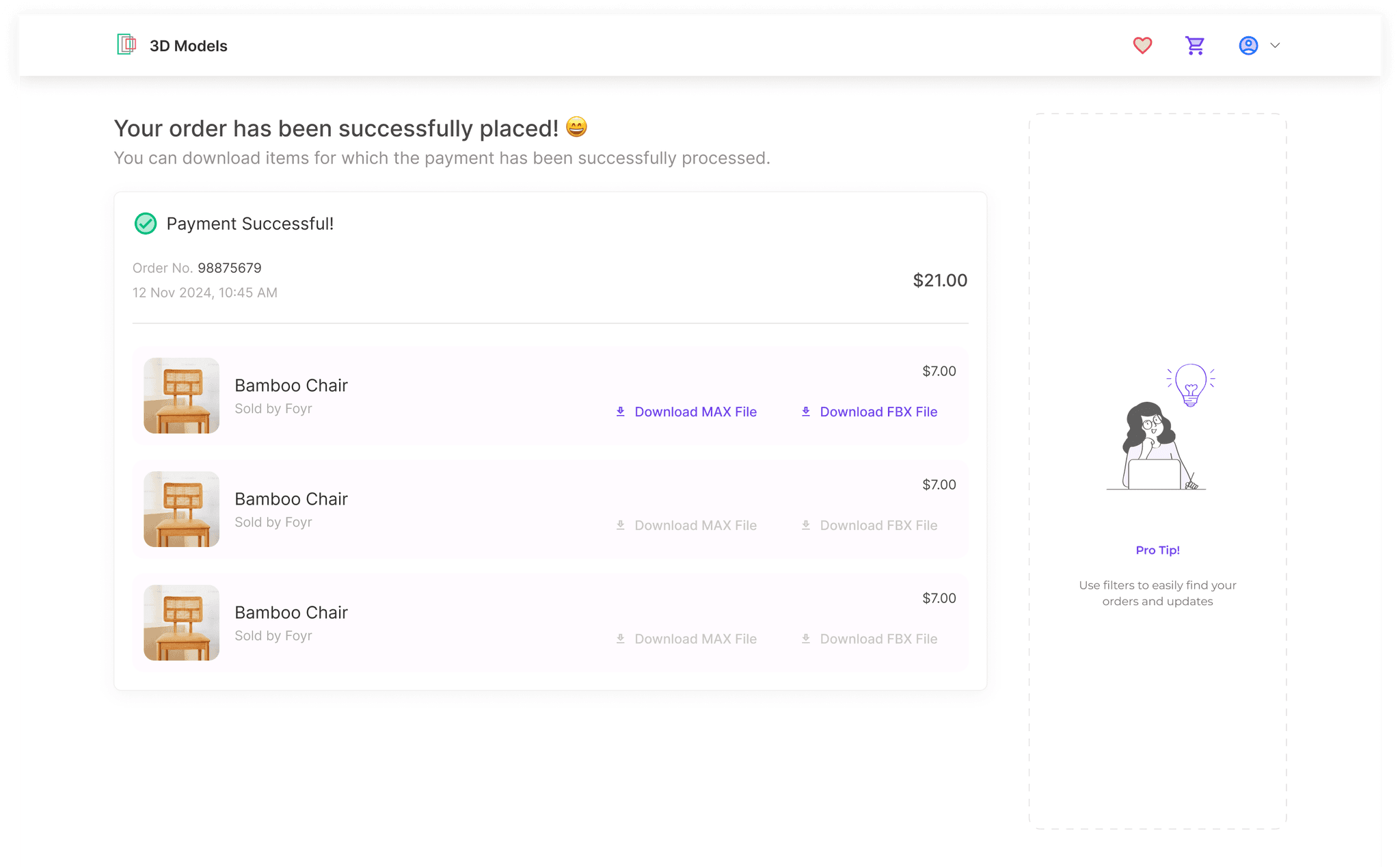
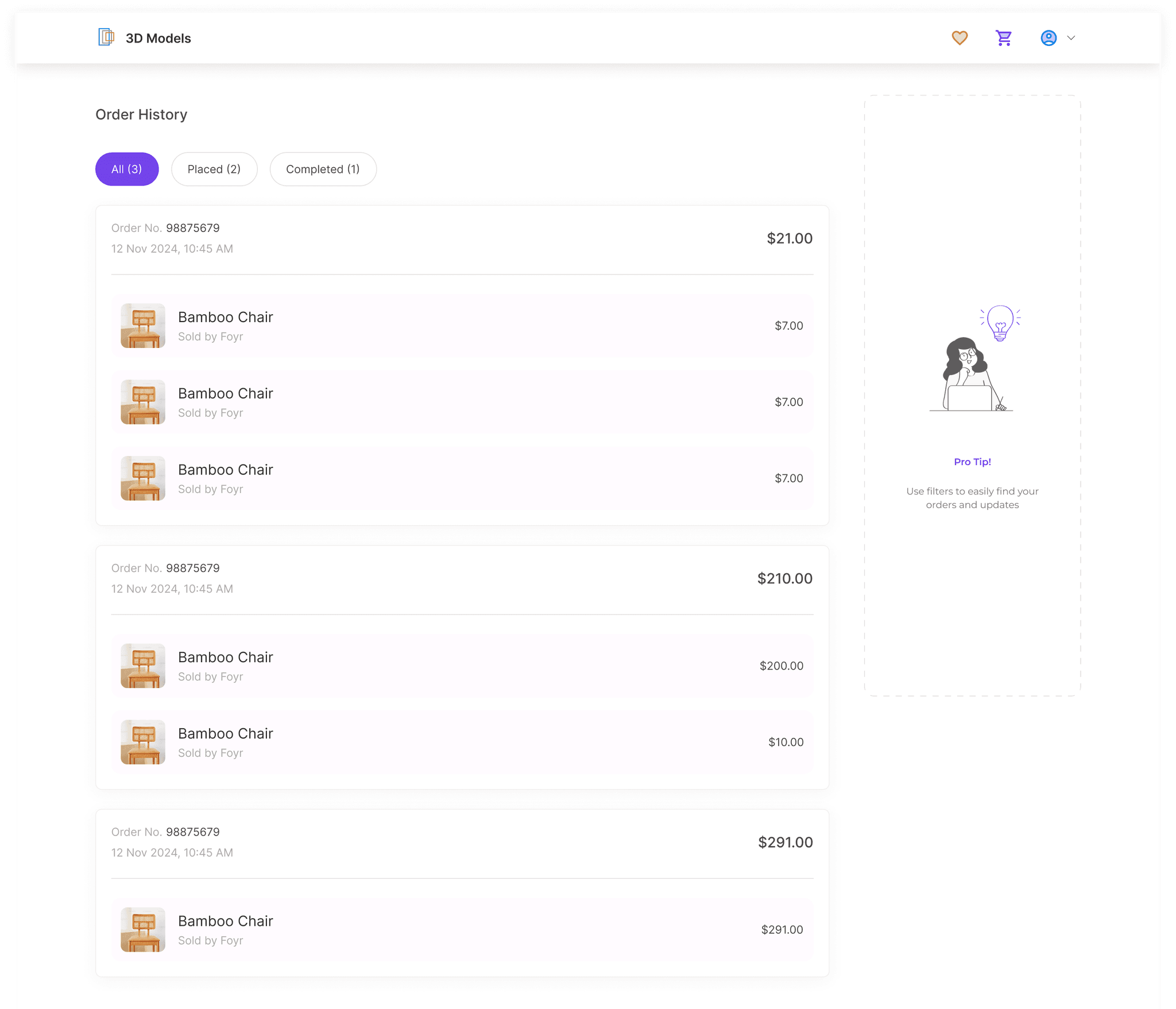
5. Cart & Order History — Removing Friction
5. Cart & Order History — Removing Friction
The checkout process should be as frictionless as possible because:
Designers often purchase multiple assets at once.
A long checkout flow increases drop-offs.
Users want instant downloads after payment.
How we designed it:
Persistent cart icon
Package 3D models and Inspiration-based 3D models introduced along with single asset purchases.
Instant download button after purchase (avoiding unnecessary confirmation pages).
The checkout process should be as frictionless as possible because:
Designers often purchase multiple assets at once.
A long checkout flow increases drop-offs.
Users want instant downloads after payment.
How we designed it:
Persistent cart icon
Package 3D models and Inspiration-based 3D models introduced along with single asset purchases.
Instant download button after purchase (avoiding unnecessary confirmation pages).
How does the product help?
How does the product help?
Reduces Workflow Disruptions — Designers can find and use 3D models without leaving the Foyr ecosystem.
Enhances Design Speed & Accuracy — Assets are optimized for Foyr Neo, ensuring seamless imports and correct scaling.
Improves Asset Management — Purchased models are saved in a centralized asset library for easy reuse.
Reduces Workflow Disruptions — Designers can find and use 3D models without leaving the Foyr ecosystem.
Enhances Design Speed & Accuracy — Assets are optimized for Foyr Neo, ensuring seamless imports and correct scaling.
Improves Asset Management — Purchased models are saved in a centralized asset library for easy reuse.
My Learnings from the Project
My Learnings from the Project
Took Inspiration from Best Practices — Looked at Sketchfab, Adobe Stock, Amazon, and TurboSquid. It was quite fun to research and implement.
Analyzed What Worked for Our Users — Adapted those ideas specifically for interior designers (eg. quick category filters for kitchens, staging, and bathrooms).
Simplified, Not Overcomplicated — Many platforms overdo filters and options; we prioritized clarity and speed.
Took Inspiration from Best Practices — Looked at Sketchfab, Adobe Stock, Amazon, and TurboSquid. It was quite fun to research and implement.
Analyzed What Worked for Our Users — Adapted those ideas specifically for interior designers (eg. quick category filters for kitchens, staging, and bathrooms).
Simplified, Not Overcomplicated — Many platforms overdo filters and options; we prioritized clarity and speed.
Woosh! This was long — thank you for reading through :)
Please reach out to me if you have any questions or suggestions or just want to say hi lol, always up for some yapping ;)
Woosh! This was long — thank you for reading through :)
Please reach out to me if you have any questions or suggestions or just want to say hi lol, always up for some yapping ;)
back to top
back to top
back to top